This post may contain affiliate links. If you purchase with one of these links, I receive a small commission at no extra cost to you. Read the full affiliate policy.
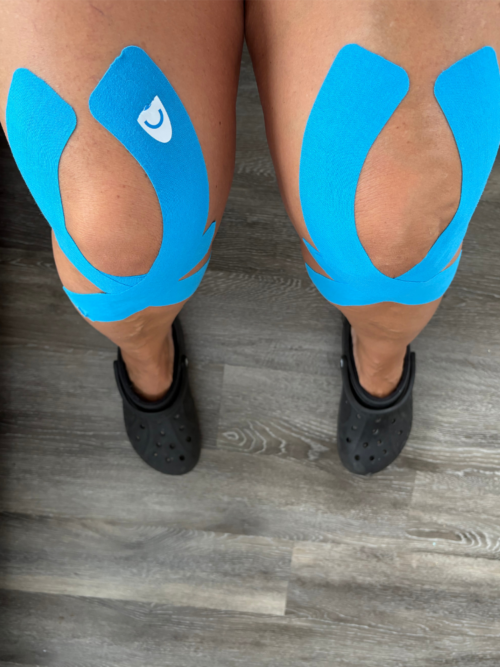
Knee pain and shin splints for beginner runners are so common it can feel like a secret club nobody warns you about before you join. I found that out the hard way, with my knees taped up so much I looked like I’d been in a car accident just to finish a 5K. It was frustrating and painful, and it almost made me quit before I’d really started.
Here’s what actually causes that pain when you’re new to running, and what genuinely helped mine disappear instead of just covering it up. I’m not a physiotherapist or a medical professional. This is what worked for my body, not a medical protocol, so if your pain is severe, sharp, or sticking around, please see someone who can actually look at your knee.
If you’ve ever been told running is bad for your knees because of your size, I want to deal with that before anything else. I heard that one for years, and it’s a big part of why I didn’t start sooner.
This post is all about knee pain and shin splints for beginner runners.
Why Knee Pain and Shin Splints Are So Common for Beginners
Starting to run is exciting, and then the aches show up and it can feel like your body is telling you to quit. You’re not imagining it and you’re not alone in it. Running is high impact, and your joints and connective tissue need time to adapt to a movement they’ve never done before.
The two most common culprits have names: runner’s knee (patellofemoral pain) and shin splints (medial tibial stress syndrome). Running injury research puts the picture in perspective. One systematic review found that roughly half of runners deal with some kind of injury in a given year, and patellofemoral pain shows up as the single most common overuse injury seen in sports medicine clinics, accounting for as much as a quarter to 40% of knee-related clinic visits depending on the study. Shin splints estimates vary more by population, but they consistently rank among the top few running injuries, especially for people who are new to running or who’ve recently increased their mileage. (Source: Mellinger & Neurohr, Annals of Translational Medicine, and Kim et al., PMC.)
It’s common. It’s not a sign your body isn’t built for this.
Busting the Myth: Is Running Really Bad for Your Knees?
Let’s clear this up first, because it’s the thing that stops so many beginner runners in bigger bodies before they even lace up.
For a long time I believed carrying extra weight meant running would inevitably wreck my joints. It’s one of the most repeated pieces of “advice” people in bigger bodies hear, usually from someone who’s never run a step themselves. The science doesn’t back it up.
A large study out of Baylor College of Medicine, published in Arthritis Care and Research, followed over 2,600 people and found recreational runners were not at increased risk for knee osteoarthritis compared to non-runners. More recent reviews using MRI to look at cartilage have found similar things: a single run causes small, temporary changes in cartilage that resolve on their own, and a history of recreational running doesn’t raise your risk of knee problems down the road. Researchers at Cedars-Sinai have pointed out that movement actually helps push nourishing fluid into cartilage, meaning some joint loading is a good thing, not a threat.
None of that means pain isn’t real, or that your knees can’t hurt as a beginner. They can, and mine certainly did. But the pain I had wasn’t my body being “too big to run.” It was new stress on muscles and joints that hadn’t done this before, and that’s fixable.
Best Ways to Handle Knee Pain and Shin Splints as a Beginner Runner
1. Doing Too Much, Too Soon
This is the biggest cause of beginner running injuries, full stop. Going from zero running to five days a week, or bumping your mileage up fast, asks your joints and connective tissue to adapt faster than they’re built to. A common guideline is to increase weekly mileage by no more than about 10%. It’s not a guarantee against injury, some research questions how strict that number really needs to be, but it’s a reasonable ceiling to keep in mind rather than a strict prescription.
2. Worn-Out or Wrong Shoes
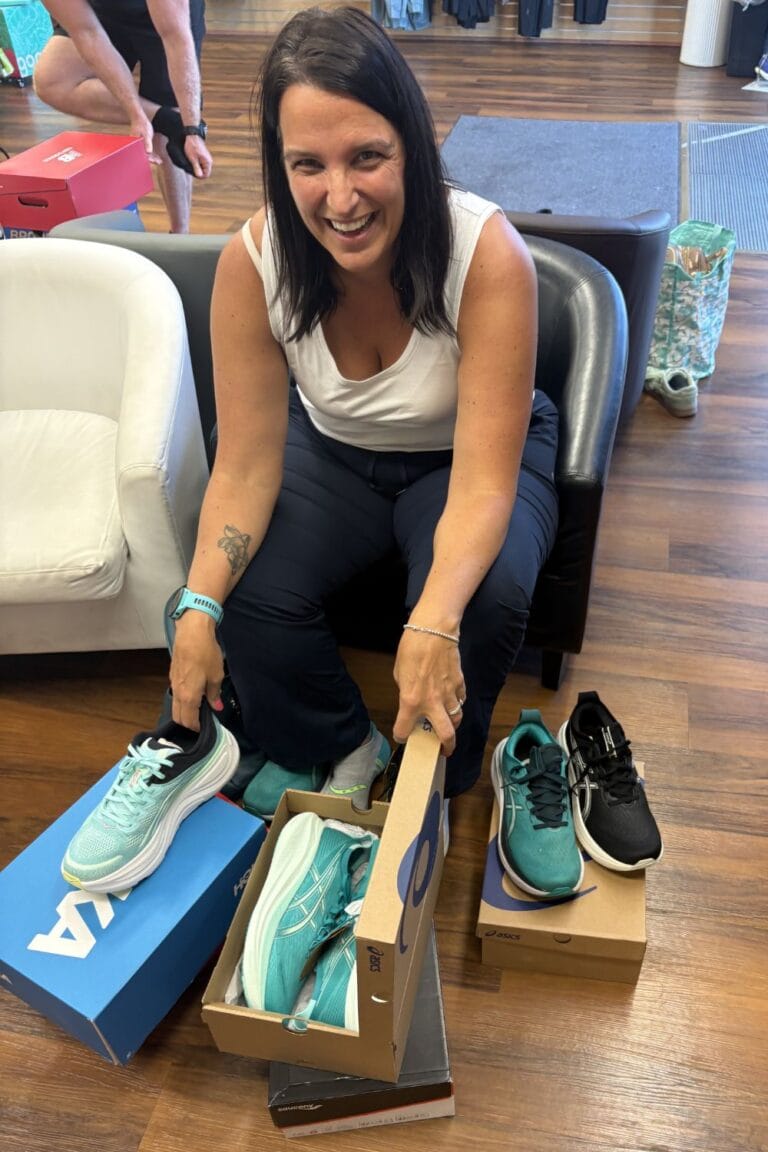
Your shoes are your first line of defense against impact, and cushioning breaks down long before a shoe looks visibly destroyed. A commonly cited guideline is replacing running shoes somewhere around 300 to 500 miles, though that range shifts depending on the shoe, your body weight, and your gait, so treat it as a rough marker, not a countdown timer. Getting fitted at a specialty running store can also help you find a shoe that matches your foot and gait instead of guessing.
3. Weak Hips, Glutes, and Core
When these muscles aren’t doing their job, your knees and lower legs end up absorbing more impact than they should. Weak hips in particular can let your knee roll inward when you land, which puts uneven pressure on the cartilage under your kneecap, a common contributor to runner’s knee. Weak calves play a similar role in shin splints.
4. Running Form
You don’t need to overhaul your stride, but a couple of small things help. Overstriding, landing with your foot too far out in front of your body, increases the impact force through your knees. Aiming for a shorter stride with a slightly bent knee on landing, instead of a stiff straight leg, absorbs shock better.
5. Tight Muscles
Tightness in your calves, hamstrings, quads, and hip flexors can pull on the knee joint or change how you move, which adds up over a run. The IT band, the thick band of tissue running down your outer thigh, is another common spot that gets tight and irritates the knee.
For me, it was a mix of the first three. I ramped up too fast, I was running in shoes that had way more miles on them than I realized, and my hips were doing basically nothing to support my stride.
What Actually Helped Me
KT Tape
I used a lot of KT tape on my knees in the early days, like, a lot. There were runs where I had it wrapped in an X pattern across both knees and probably looked more like I was recovering from surgery than out for a jog. It didn’t fix the underlying problem, but it gave my knees enough support to keep moving while I worked on the things that actually did fix it. If you’re dealing with knee pain right now and need something to get you through your next few runs while you sort out the root cause, KT Tape (or similar kinesiology tape) is worth having in your bag.
Similar options if you want to compare:
- RockTape
- KT Tape Pro
- Any generic kinesiology tape from a pharmacy or sports store
Foam Rolling
Foam rolling became part of my routine once the tape stopped being enough on its own. A few minutes on my quads, IT band, and calves after a run made a real difference in how my knees felt the next day. It’s not glamorous and it’s genuinely uncomfortable the first few times, but rolling out tight muscles takes pressure off the joints they’re pulling on. I still keep a foam roller next to my running shoes.
Massage Gun
I haven’t personally used a massage gun, but I’ve seen a lot of other runners in my community swear by one for the same tight quads and calves that foam rolling targets. If a foam roller feels like too much pressure or too hard to manage, a massage gun is worth looking into as an alternative.
Ice for Swelling, Heat for Tight Muscles
Ice works well right after a run if something feels inflamed, about 20 minutes at a time, never straight on skin. A heating pad is better for general tightness or before stretching, since heat increases blood flow rather than reducing swelling.
Strength Training
This is the one that actually changed things for me long term. When I started training for my half marathon, I went to see a physio about my knees, and what she told me stuck with me. She said that at my age and weight, if I wanted to keep running, I had to make sure I was doing exercises to prepare my body so it could handle the training without ending up sore all the time. She didn’t mean going to the gym five days a week. She meant small mobility exercises that have a big impact.
Adding basic strength work, glute bridges, clamshells, squats, made my hips and glutes strong enough to actually support my knees instead of leaving them to do all the work alone. Research on runner’s knee consistently points to strengthening the quads and glutes together as one of the more effective approaches, since those muscles act as shock absorbers and stabilizers.
You don’t need a gym membership or a complicated program. Two short sessions a week focused on your hips, glutes, and core is enough to start noticing a difference. A simple rotation to start with:
- Glute bridges
- Clamshells
- Bodyweight or wall squats
- Step-ups
- Calf raises
- Planks
Stretching
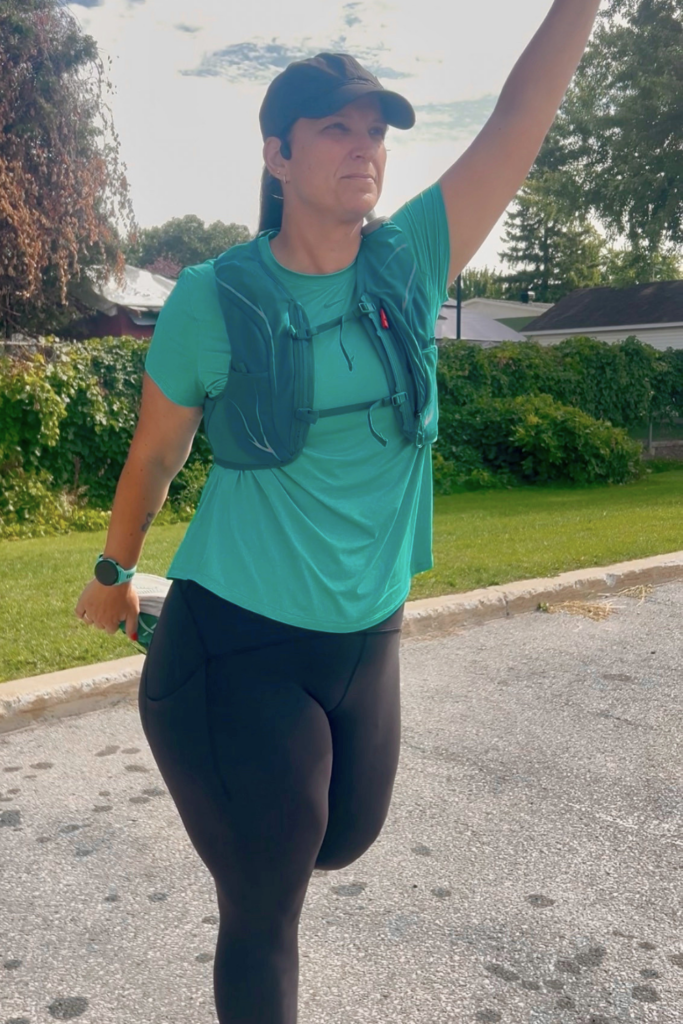
Stretching regularly, not just before a run but on rest days too, kept everything looser and less angry. Calves, hamstrings, and hip flexors were the areas that made the biggest difference for me specifically, since tightness there tends to pull directly on the knee and shin. Don’t skip the IT band either.
Warm-Up and Cool-Down
A five to ten minute warm-up of brisk walking or light jogging before you run helps your muscles and joints ease into the effort instead of starting cold. A cool-down with some static stretching afterward, holding each stretch for twenty to thirty seconds, helps with recovery too. It’s an easy step to skip, but it matters.
Run/Walk Intervals
This is the one I’d tell any beginner to start with before anything else on this list. Switching to run/walk intervals instead of trying to run continuously took a huge amount of impact stress off my knees while I built up strength and mileage slowly.
If you’re not already using this method, How to Start Running As A Beginner, Even If You Feel Completely Out Of Shape walks through exactly how to ease into it.
When to See a Doctor
Taping, rolling, strengthening, and smart progression helped my pain, but there’s a difference between normal beginner soreness and something that needs actual medical attention. Your body telling you to stop and get checked isn’t a failure, it’s just information.
See a doctor or physiotherapist if you have:
- Sharp or stabbing pain instead of a dull ache
- Swelling that doesn’t go down with rest and ice
- Pain that gets worse instead of better with rest
- Pain that changes how you’re walking, even when you’re not running
- Pinpointed pain on your shin bone that doesn’t ease up after 24 hours of rest, which can be a sign of a stress fracture
- Numbness, tingling, or weakness in your foot or lower leg
This post was all about knee pain and shin splints for beginner runners.
Between the tape, the foam roller, the strength work, and switching to run/walk intervals, my knees stopped being the thing standing between me and a run. If you’re in the thick of it right now, know that it’s very likely fixable, and it doesn’t mean running isn’t for your body.
If you’re still building your base mileage, 5K to 10K Training Plan for Curvy Runners: A Realistic 8-Week Plan is a good next stop once your knees are feeling steadier. And if today’s run left you sore in ways you didn’t expect, What to Do After a Run (A Beginner Routine That Really Helps You Recover) covers what to do in the hours right after.
OTHER POSTS YOU MAY LIKE
- 7 Beginner Running Mistakes That Are Holding You Back (And How to Fix Them)
- How to Start Running As A Beginner, Even If You Feel Completely Out Of Shape
- What to Do After a Run (A Beginner Routine That Really Helps You Recover)