I used to think fueling during a run was for marathon runners. Not for me. Not for someone who was just trying to get through a 10K.
So I didn’t fuel. I didn’t even hydrate properly. And I was struggling. Every long run felt harder than it should have. I was dragging myself through the last few kilometres wondering why running felt so brutal when other people made it look manageable.
Turns out, I wasn’t struggling because I wasn’t fit enough. I was struggling because I was running on empty.
Once I started actually fueling, everything shifted. Not dramatically, not overnight. But enough that I noticed. Enough that I’ll never go back to white-knuckling my way through a long run with nothing in my system.
Here’s what I’ve learned about mid-run fueling, and why it matters way before the marathon distance.
Do you actually need to eat during a run?
Short answer: probably not yet, but that’s about to change.
If your runs are under 60 minutes, you don’t need to worry about eating mid-run. Your body has enough stored energy to carry you through. But once you start pushing past that hour mark, which happens naturally as you build toward a 10K or longer distances, your fuel stores start to deplete. That’s when mid-run fueling becomes less of a “nice to have” and more of a “your legs will thank you” situation.
If you’re following my 5K to 10K training plan [LINK to 5K to 10K post], you’re probably getting close to that threshold right now.
What actually happens when you don’t fuel
You might have heard the term “bonking” or “hitting the wall.” It sounds dramatic, and honestly, it is. It’s the moment your body runs low on glycogen, the stored form of carbohydrates your muscles use for energy, and everything gets hard fast. Your pace slows. Your legs feel like concrete. Your brain goes foggy.
It’s not a fitness problem. It’s a fueling problem. And I say that from experience.
The basics of mid-run fueling
Your body needs one thing during a run: simple carbohydrates. Not protein, not fat, not a full meal. Simple carbs digest quickly, hit your bloodstream fast, and give your muscles exactly what they need to keep going.
Aim to take in some fuel every 30 to 45 minutes on runs over an hour. You don’t need a lot. A small amount goes a long way.
And before we get into what to eat, a quick note: make sure you’ve already nailed what you eat before your run too. I cover that in detail here [LINK to What to Eat Before a Run post].
What to eat during a run: real options that actually work
Here’s the thing about mid-run fuel: it has to be practical. You need something you can carry, chew, swallow, and stomach while your body is working hard.
Running gels
Gels are small, lightweight, and designed to digest quickly. Honestly though, eating, breathing, and swallowing at the same time while running is more challenging than it sounds, and it took me a while to get the hang of it. My advice: practice in training, slow down slightly when you take one, and always chase it with water. GU Energy Gels are my go-to. They come in a lot of flavours so you can find one that works for you.
Chews and gummies
If gels feel like too much to manage mid-run, chews are worth trying. Same idea, different format: you can eat them gradually rather than downing a whole packet at once, which some runners find much easier while in motion.
My pick here is Noogs. They taste like actual candy, which makes them so much easier to stomach when you’re deep into a run and the last thing you want is something that tastes like a science experiment. The bonus? They have electrolytes and energy built in, so you’re not just getting sugar, you’re getting real fuel. Highly recommend trying these if gels aren’t your thing.
Honey Stinger energy waffles
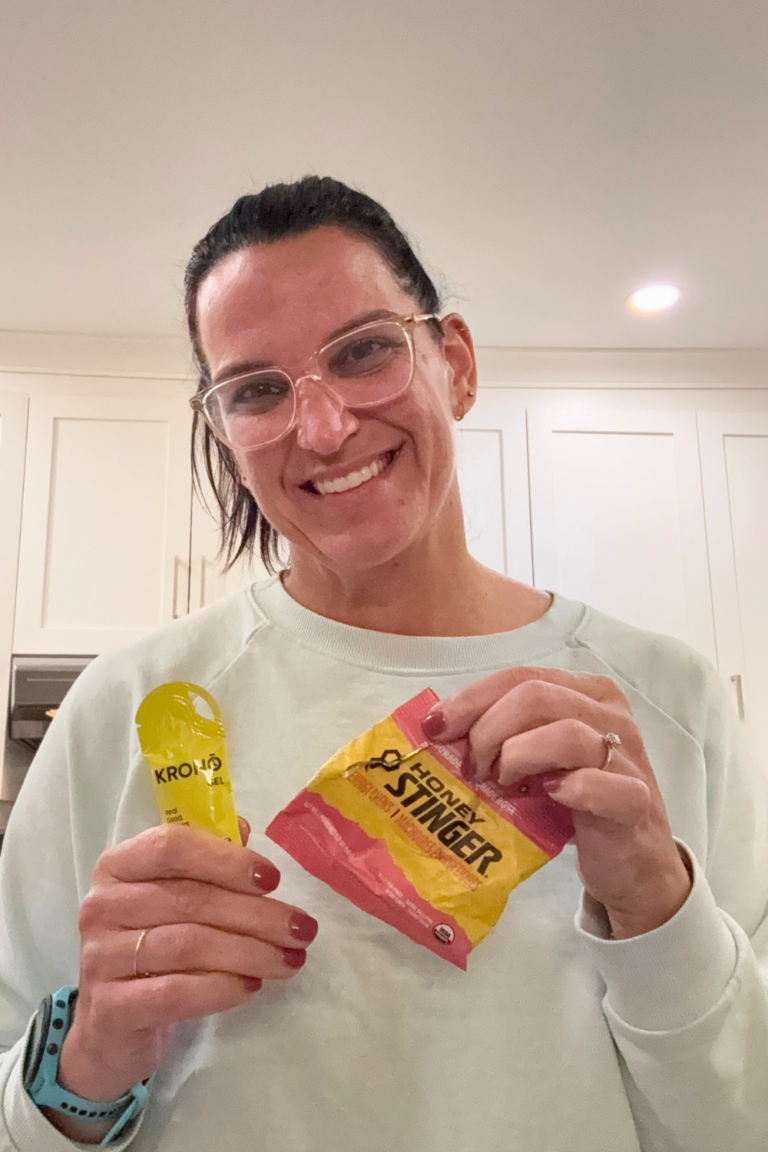
These are my favourite option when I want something that feels more like food. Honey Stinger waffles are thin, lightly sweet, and surprisingly easy to eat mid-run. They’re made with honey for quick energy and they don’t crumble or make a mess in your pocket. If you’ve never tried running waffles, start here.
Nerds Clusters
Yes, the candy. I tried these after seeing them pop up in the running community and honestly? They work. They’re simple sugar, easy to chew, and feel like a little reward when you’re deep into a long run. A small handful every 45 minutes does the job. Not as compact as a gel but if performance fuel makes you want to gag, candy might be your answer.
Bananas (on race day)
You’ll almost always find bananas at race aid stations. A great mid-race option when you don’t have to carry them yourself.
What to avoid
Anything high in fat, protein, or fibre during a run is going to slow your digestion down at exactly the wrong moment. That means skipping protein bars (save those for after), anything greasy or heavy, high-fibre snacks, and dairy, which for most people is a recipe for a very bad time.
Try everything in training first. Never introduce a new food on race day. Your gut deserves a test run too.
A note for curvy runners
I want to say something I wish someone had told me earlier: mid-run fueling is not about eating because you burned enough calories to “earn” it. It’s about keeping your body functional so you can finish the run you started.
Diet culture has a way of creeping into running spaces in ways that don’t serve us. Eating during a run is not a weakness. It’s just running. And you are a runner.
What about hydration?
Fuel and hydration go together. If you’re carrying snacks, you should also be carrying water, especially on longer runs. Sip regularly rather than waiting until you’re thirsty. On hot days or longer efforts, an electrolyte drink or tablet helps replace what you’re sweating out.
How to carry your fuel
This is more important than it sounds because nobody wants to run while holding a fistful of gels.
My go-to is my Osprey running vest. Honestly, it has changed my running. I rarely head out without it now. It holds my fuel, my water, my phone, everything, and I barely notice it’s there. If you’re building toward longer distances, a vest is worth every penny.
For shorter runs where I don’t need as much, I grab my Nathan handheld bottle. It has a small pocket that fits a gel or two, which is all you need for an hour-long run.
Start simple
Pick one option from the list above. Try it on your next run over an hour. See how your body responds. Adjust from there.
Fueling is personal. What works for your running friend might not work for you. The only way to find your thing is to experiment in training, so it’s sorted long before race day.
You’ve got this.