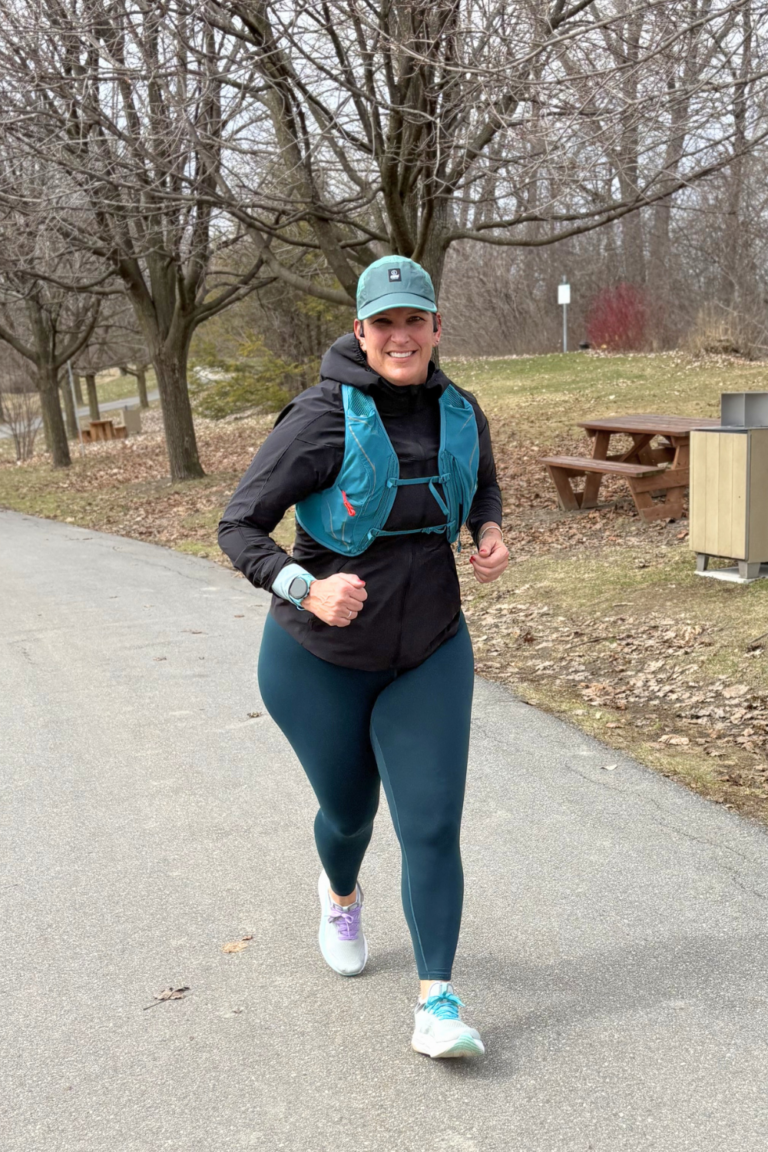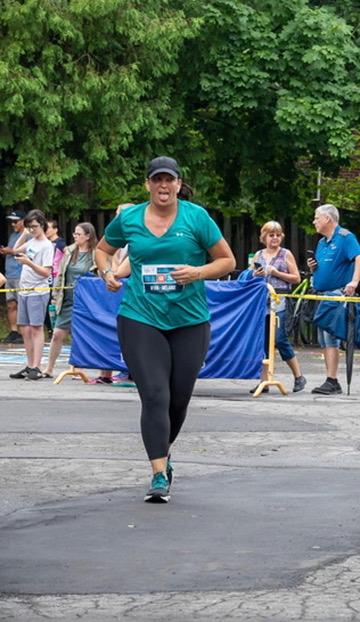
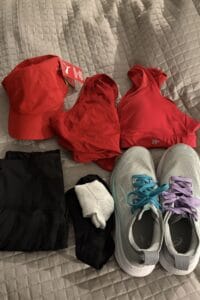
Let me paint you a picture. The night before, you were feeling motivated. Genuinely. You laid out your entire outfit before bed. leggings, sports bra, top, socks, shoes lined up by the door. You set your alarm for 5am feeling proud of yourself.
Then the alarm goes off. And suddenly, past-you feels like a completely different person. Present-you is horizontal, warm, and regretting every single life choice that led to this moment. The outfit on the floor is mocking you. The only thing that sounds remotely possible is rolling over and going back to sleep.
I’ve been there. Many, many times. And if you’re a beginner runner, or someone coming back after a break, that “I just don’t want to” feeling hits harder and more often than anyone warns you about. Here’s the truth no one tells you: motivation isn’t a tap you can turn on whenever you feel like it. It’s something you build, protect, and sometimes fake until it kicks in.
In this post I’m sharing what actually works for me. just real, human strategies for getting your trainers on when every part of you is saying no.

First: Let’s Talk About Why Motivation Disappears
Before we fix the problem, it helps to understand it. Motivation as a beginner runner tends to dip for a few really common reasons:
- Running still feels hard physically, and your brain is trying to protect you from discomfort
- You’re not seeing results as fast as you expected
- Life is busy, and running feels like one more thing on a very long list
- You’ve missed a few runs and now feel guilty, which makes you want to avoid running even more
- You compare yourself to other runners and feel like you’re not “good enough”
Sound familiar? All of these are completely normal. And none of them mean you’re not a runner.
1. Stop Waiting for Running Motivation. Start Anyway
This is the one that changed everything for me. I used to think I needed to feel motivated before I could run. Turns out, it works the other way around. Action creates motivation, not the other way around.
My rule: just put your shoes on. That’s the only commitment. Once I’m standing outside in my kit, I almost always run. And if I truly can’t face it that day? I give myself permission to walk instead. A walk still counts. Movement still counts.
💡 Try this: Set a “two-minute rule”. Tell yourself you only have to run for two minutes. If you still want to stop after two minutes, you can. Spoiler: you usually won’t stop.
2. Make Your Runs Something You Actually Look Forward To
One of the biggest mistakes I made early on was treating running as pure punishment. No wonder I dreaded it. The shift came when I started protecting my run as me time. something I actually enjoyed.
Here’s what helped:
- A playlist or podcast I only listen to while running (your brain starts associating running with that reward)
- A beautiful or interesting route, even if it means driving somewhere
- A post-run coffee or treat I genuinely look forward to
- Running gear I actually like wearing. yes, this matters more than people admit
💕 Note: If getting dressed for a run feels like a chore, it might be time to update your kit. A well-fitting sports bra and leggings that don’t roll down can genuinely transform how you feel heading out the door. I’ve shared my favourites in my Best Supportive Sports Bras for Curvy Runners post.
3. Ditch the All-or-Nothing Thinking
One of the biggest motivation killers for beginner runners is all-or-nothing thinking. Missed a run? You’re not starting over. You’re just continuing. This was honestly the hardest mindset shift for me. I used to think that if I missed one run on my plan, the whole week was ruined. So I’d give up entirely.
Now I think of it differently: one missed run is like missing one episode of a series. You don’t stop watching the whole show. You just pick it back up.
A shorter run still counts. A slower run still counts. Walking still counts. The only run that doesn’t count is the one you don’t do because you talked yourself out of it.
4. Track the Wins That Have Nothing to Do With Speed
Early in my running journey, I made the mistake of obsessing over pace. I’d finish a run feeling proud, open my app, see a “slow” number, and suddenly feel like I’d failed. Sound familiar?
The shift: I started tracking different wins. Things like:
- I ran when I didn’t want to
- I ran further than I did last month
- I felt stronger going up that hill that used to stop me
- I ran consistently for 3 weeks straight
💡 Try this: Keep a simple running journal (even a Notes app works). Write one thing after every run that had nothing to do with speed. You’ll be surprised how much evidence you accumulate that you ARE progressing.
5. Find Your ‘Why’ and Come Back to It Often
When my running motivation dips, and it still does, I go back to why I started. And my why is something I had to get really honest with myself about.
I started running because I was tired of feeling like movement wasn’t made for bodies like mine.
At first, I could barely run for one minute without stopping. I felt out of place, slow, and honestly embarrassed. Every time I saw runners online, they looked nothing like me. But something in me still wanted to try.
Not to shrink myself.
Not to punish my body.
Not to become the fastest runner.
I started running because I wanted to prove to myself that I was capable of hard things.
Little by little, one interval at a time, running changed more than my fitness. It changed my mindset. It taught me consistency, confidence, and how to stop waiting until I looked “good enough” to call myself a runner.
Now I run to feel strong.
I run for my mental health.
I run because it reminds me that progress doesn’t have to be perfect to matter.
And if my journey helps one curvy girl believe she belongs here too, then every single step has been worth it.
Your ‘why’ might look completely different from mine. That’s exactly how it should be. The important thing is finding it.
Write it down. Put it on a sticky note. Make it your phone wallpaper. On the days you really don’t want to run, that’s what you come back to.
6. Use Accountability (Without Pressure)
Telling someone else about your running plans makes you more likely to follow through. But it needs to be the right kind of accountability. Not someone who’ll make you feel guilty for missing a run, but someone who’ll cheer you on when you do show up.
Some ideas:
- Share your runs on Instagram stories (even if it’s just a sweaty selfie)
- Find a running buddy, even a virtual one
- Join a beginner-friendly running group or online community
- Sign up for a low-key race or virtual 5K to give yourself a gentle goal
7. Gear That Makes You Want to Get Out the Door
I know this sounds shallow, but hear me out. When I invested in a pair of running shoes that actually fit my wide feet properly, my whole attitude towards runs shifted. When I’m not thinking about blisters, chafing, or straps digging in, I can actually enjoy the run.
The right gear is a motivation tool, not a luxury. A few things worth investing in:
- Well-fitted running shoes (I’ve shared my top picks for curvy runners in my Best Running Shoes post)
- A supportive sports bra that stays put and doesn’t dig in (one of the best things you can do for yourself)
- Wireless earbuds that stay in. nothing kills a run faster than fiddling with earphones every 30 seconds
- Anti-chafe balm. An absolute must for longer runs. Bodyglide is my favourite.
A Final Word: You Don’t Have to Feel Like a Runner to Be One
Motivation is not a personality trait. It’s not something some runners have and others don’t. It ebbs and flows for everyone. beginner and seasoned runner alike.
The runners who stick with it long-term aren’t the ones who always have running motivation. They’re the ones who have built habits and systems that carry them through the days when motivation goes quiet.
You’re building that now. Every run you do, even the reluctant ones. especially the reluctant ones. is proof that you’re a runner.
Other related articles:
- Mindset for Beginner Runners: The Shift That Changed Everything for Me
- Why Running Feels So Hard (And What to Do About It)
- Best Supportive Sports Bras for Curvy Runners
- Best Running Shoes for Curvy Runners
- How Often Should a Beginner Run? A Realistic Schedule That Actually Works